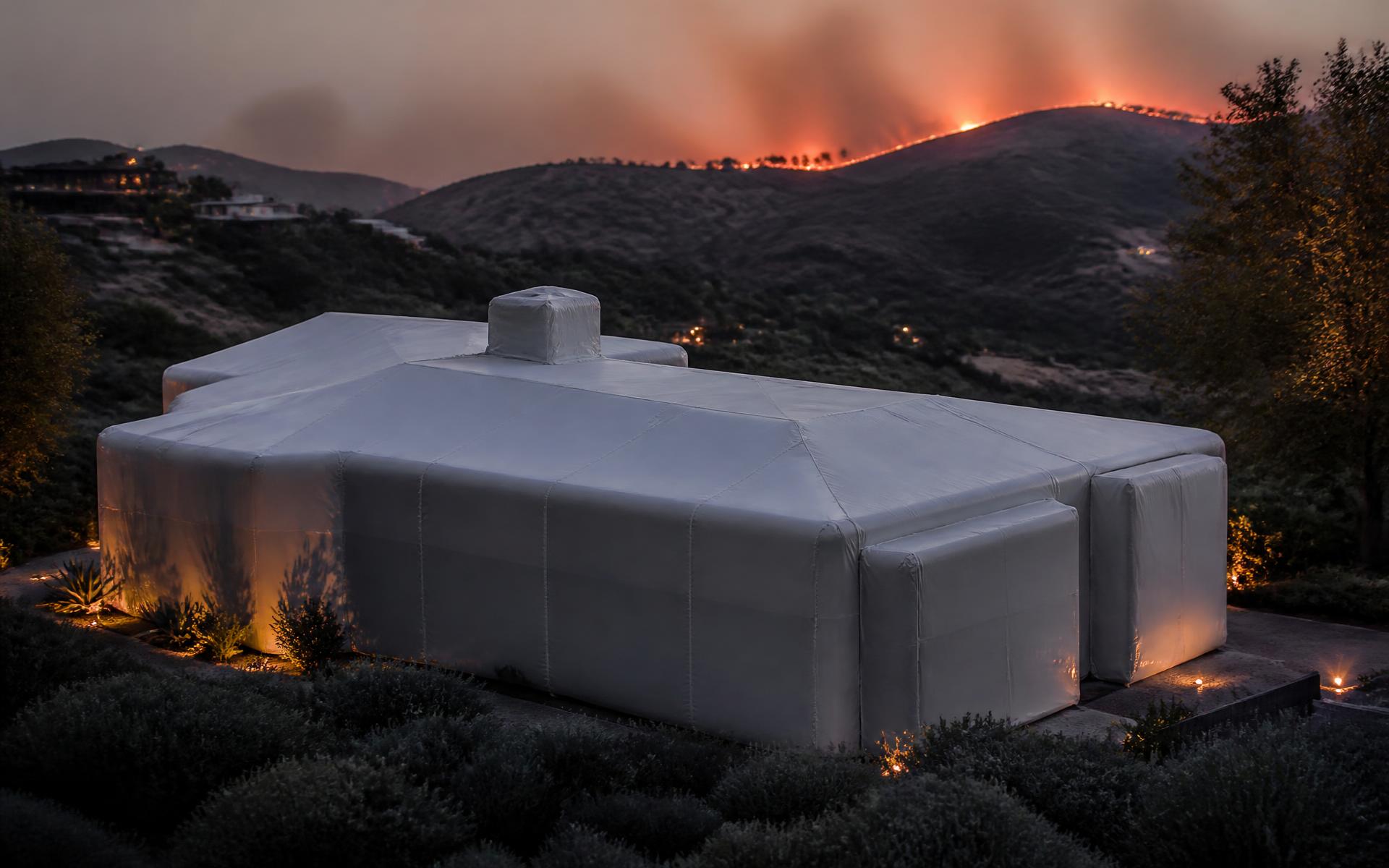
Cover your home before wildfire arrives.
BlazeShell is developing a deployable, fire-resistant envelope designed to create a temporary protective layer around your home when wildfire threatens.
In development. Final specifications, performance, availability and pricing are subject to testing and change.
Deployable
Designed for rapid deployment
Whole-Home
A temporary protective layer around the structure
Removable
Deploy when threatened. Remove when safe.
Purpose-Built
Designed specifically for wildfire defense
How it works — five stages
Cover the home before the wildfire arrives.
Ready
The BlazeShell system remains compactly stored until wildfire conditions threaten the property.
Guide
Temporary flexible arches create an elevated deployment path above the roof and architectural features.
Cover
The protective envelope travels across the guide arches and into position over the home.
Seal
The temporary guides are withdrawn while the envelope settles around the structure and is secured to its anchoring system.
Protected
The final deployed BlazeShell surrounds the home with the guide system completely removed.
After conditions are safe, BlazeShell is designed to be removed and stored for future deployment.
The gap
Wildfire defense shouldn't end at the property line.
Home hardening, vegetation management and defensible space can substantially reduce wildfire risk. But during a wildfire, wind-driven embers, radiant heat and burning debris can still reach the structure itself.
BlazeShell is being developed as an additional temporary layer of defense—deployed when wildfire threatens and removed when the danger has passed.
BlazeShell is designed to complement—not replace—defensible space and home-hardening practices.
Concept system · not to scale
Temporary when you need it. Out of sight when you don't.
Final geometry, materials, anchoring and deployment mechanisms are subject to engineering and testing.
Protective Envelope
A lightweight, fire-resistant outer covering designed for temporary wildfire exposure.
Deployment System
Temporary guide structures create a smooth deployment path above roofs, gutters, vents, chimneys and other architectural features while the envelope is positioned. The guides are removed as the envelope is secured around the structure.
Anchoring System
Perimeter attachment and tensioning points hold the envelope around the structure.
Estimate your system
How much BlazeShell might your home need?
Enter a few basic details about your home to estimate the protective-envelope area it could require.
This is a preliminary geometry estimate, not a quote or engineered measurement.
Use the approximate total finished square footage across all levels.
Home configuration
Commercial & government
Protect more than homes.
The BlazeShell platform is also being explored for commercial facilities, infrastructure, equipment and public-sector assets exposed to wildfire risk.
Purpose-built configurations may vary by asset, geometry, deployment requirements and anchoring strategy.
Early access
Help bring BlazeShell to wildfire country.
BlazeShell is currently in the development stage. We're measuring homeowner interest before moving into full-scale engineering, testing and manufacturing.
Illustrative system price ranges
Illustrative planning ranges based on preliminary system design and typical home configurations. Actual pricing would vary with home size, number of stories, roof geometry, layout, installation requirements and final system design.
BlazeShell is currently in development. Final pricing has not been established.
Tell us whether BlazeShell makes sense for your home. No purchase or payment required.
Partnerships
Help bring wildfire resilience to more properties and communities.
BlazeShell is interested in conversations with organizations that could help expand access to deployable wildfire protection, support real-world learning, or explore new applications as the platform develops.
We welcome conversations with insurers, HOAs, property managers, wildfire-resilience organizations, community groups, distributors and other organizations working to reduce wildfire risk.
For organizations protecting their own facilities, infrastructure or equipment, see Commercial & Government.
Questions
Straight answers.
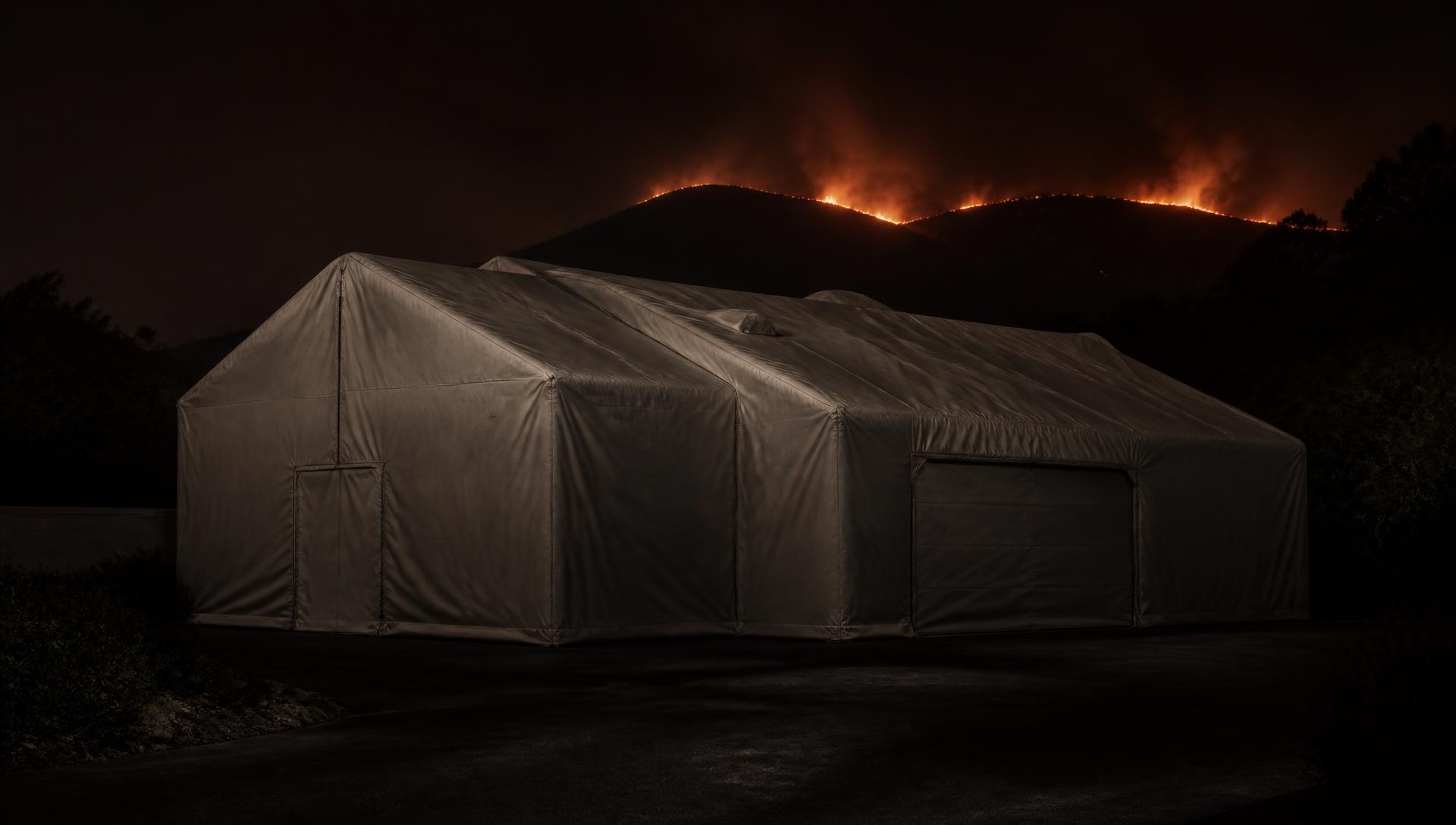
When it's time to leave, help protect what stays behind.
Join the homeowners helping shape a new approach to whole-home wildfire defense.
No payment required. BlazeShell is currently under development and has not yet completed wildfire performance testing.